

ISO 27001 Compliance
SISO 27001 Compliance [2026]: An Updated Guide
Information drives every modern organization. Data fuels growth, innovation, and competitive advantage. At the same time, cyber threats evolve with alarming speed. Ransomware groups refine their tactics. Insider threats grow more sophisticated. Regulatory scrutiny intensifies across regions. In this environment, businesses demand structure, discipline, and assurance. That demand explains why the Updated Guide of ISO 27001 matters more in 2026 than ever before.
Understanding ISO 27001 in 2026
ISO/IEC 27001 defines requirements for establishing, implementing, maintaining, and continually improving an Information Security Management System (ISMS). Organizations use this framework to protect confidentiality, integrity, and availability of information assets.
International Organization for Standardization and International Electrotechnical Commission jointly publish the ISO/IEC 27000 family. The 2022 revision reshaped Annex A controls and aligned structure with modern risk environments. In 2026, organizations now operate under tighter regulatory obligations, broader cloud adoption, and stronger supply chain oversight.
ISO 27001 compliance no longer represents a checkbox exercise. Leadership teams now treat certification as a strategic investment. Boards ask security leaders to demonstrate resilience. Clients demand proof of data protection maturity before signing contracts. Investors evaluate governance strength before committing capital.
Why ISO 27001 Compliance Matters in 2026
Cyber incidents cost organizations millions in direct and indirect losses. Regulatory fines damage reputation. Customers lose trust quickly. ISO 27001 offers a structured system that reduces uncertainty.
Organizations that achieve compliance gain:
- Strong governance over information security
- Clear accountability at leadership level
- Documented risk management methodology
- Improved incident response readiness
- Competitive advantage in global tenders
Compliance also supports alignment with privacy frameworks, contractual obligations, and regional cybersecurity laws. Instead of reacting to each requirement individually, organizations build a unified ISMS that addresses multiple demands under one structured framework.
Core Elements of ISO 27001 Compliance
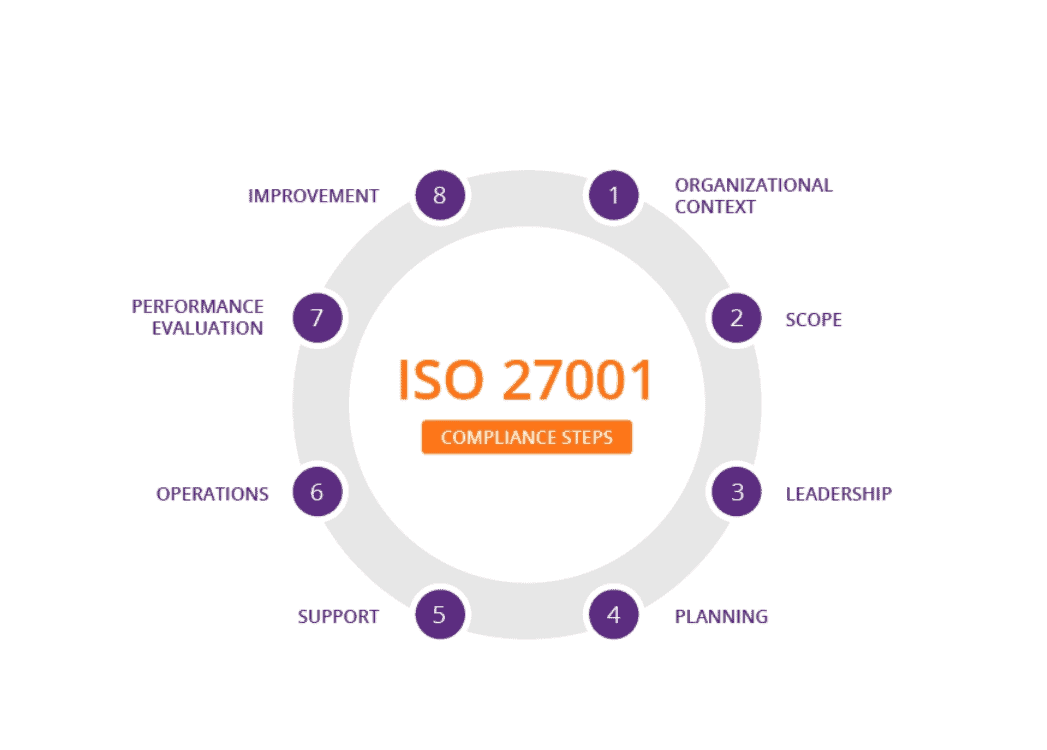
ISO 27001 compliance revolves around risk management and continual improvement. The standard does not prescribe specific technologies. It requires organizations to identify risks and implement appropriate controls.
Context of the Organization
Leadership must define internal and external issues that affect information security objectives. Stakeholders include customers, regulators, suppliers, and employees. Organizations must clearly define ISMS scope and boundaries.
A narrow scope may reduce complexity, yet it must reflect real operational risks. A poorly defined scope weakens credibility during audits.
Leadership and Governance
Top management must demonstrate active involvement. Executives must approve policies, allocate resources, and communicate security objectives. Compliance efforts fail when leadership delegates responsibility without oversight.
Security culture starts at the top. Leaders influence behavior. et expectations. Leaders reinforce accountability.
Risk Assessment and Treatment
Risk assessment forms the heart of ISO 27001. Organizations must:
- Identify information assets
- Determine threats and vulnerabilities
- Evaluate likelihood and impact
- Assign risk ratings
- Select appropriate controls
Annex A provides a catalog of controls, including organizational, people, physical, and technological measures. However, organizations must justify every selected or excluded control in the Statement of Applicability.
Operational Controls and Documentation
An ISMS requires structured documentation. Policies define direction. Procedures define execution. Records demonstrate evidence.
Key documented information includes:
- Information security policy
- Risk assessment methodology
- Risk treatment plan
- Internal audit program
- Management review outputs
Documentation must remain accurate, controlled, and accessible.
Internal Audit and Management Review
Internal audits evaluate effectiveness and conformity. Auditors must maintain objectivity and independence. Management reviews must assess performance metrics, incident trends, audit findings, and improvement opportunities.
Continuous improvement defines the lifecycle of ISO 27001. Organizations must act on nonconformities and drive corrective actions.
Key Updates Influencing 2026 Compliance
The 2022 revision introduced structural and control updates that now shape 2026 practices. Organizations have transitioned from the older Annex A structure to the revised control set.
Major themes include:
- Simplified control categories
- Emphasis on threat intelligence
- Secure development lifecycle requirements
- Cloud service monitoring
- Data masking and leakage prevention
Security leaders must understand these updates clearly. Misinterpretation leads to weak implementation. The Updated Guide of ISO 27001 ensures organizations align with current expectations and audit interpretations.
Common Challenges in ISO 27001 Implementation
Organizations often struggle with:
- Undefined asset inventory
- Inconsistent risk methodology
- Weak top management engagement
- Overcomplicated documentation
- Poor employee awareness
Many companies attempt to copy templates from external sources. That approach fails because ISO 27001 demands contextual relevance. Auditors expect alignment between documentation and operational reality.
Another common mistake involves treating ISO 27001 as an IT-only project. Information security affects human resources, procurement, legal, operations, and executive management. Cross-functional involvement determines long-term success.
The Certification Process in 2026
Certification involves a structured external audit conducted by an accredited certification body. The process usually includes:
- Gap assessment (optional but recommended)
- Stage 1 audit (documentation and readiness review)
- Stage 2 audit (implementation verification)
- Surveillance audits (annual)
- Recertification audit (every three years)
Stage 1 identifies major readiness gaps. Stage 2 evaluates practical implementation across departments. Auditors review evidence, interview staff, and inspect operational controls.
Preparation determines outcome. Organizations that invest time in internal audits and corrective actions typically achieve smoother certification.
Selecting the Right Implementation Partner
Expert guidance accelerates compliance. Many organizations seek experienced consultants to structure their ISMS efficiently.
Global Standards serves as a trusted service provider that helps organizations achieve ISO 27001 Certification with clarity and precision. Our team supports gap analysis, risk assessment workshops, documentation development, internal audit preparation, and certification coordination.
Our lead auditor holds certification from CQI IRCA, which reflects recognized global auditing competence. This expertise ensures alignment with international audit expectations and certification body standards.
Global Standards focuses on practical implementation. Design systems that reflect operational reality rather than theoretical compliance. Guide leadership engagement. Simplify documentation. We strengthen internal audit capability.
Organizations that partner with experienced advisors reduce project delays and avoid costly rework.
Building a Sustainable ISMS
Certification marks a milestone, not an endpoint. Sustainability requires discipline.
Organizations must:
- Monitor performance metrics
- Conduct regular risk reassessments
- Update controls based on emerging threats
- Train employees continuously
- Review supplier security posture
Security threats shift constantly. Cloud platforms expand. Remote work environments evolve. Artificial intelligence tools introduce new vulnerabilities.
A resilient ISMS adapts quickly. Leadership must integrate information security into business strategy. Security objectives must align with operational goals. Performance indicators must drive measurable improvement.
Integration with Other Management Systems
Many organizations integrate ISO 27001 with other standards such as quality or business continuity frameworks. Annex SL structure simplifies integration because it aligns clause structures across ISO management standards.
Integrated systems reduce duplication. Shared internal audits improve efficiency. Unified management reviews enhance strategic oversight.
This integration approach supports long-term governance maturity and resource optimization.
Preparing for Future Regulatory Landscapes
Governments worldwide continue to strengthen cybersecurity regulations. Data protection authorities demand stricter breach notification timelines. Supply chain security receives heightened attention.
ISO 27001 compliance provides structured readiness for these evolving requirements. Organizations that already operate under a mature ISMS adapt faster to new regulations. They demonstrate due diligence. Show accountability. Provide evidence quickly during regulatory inspections.
Security maturity also influences client acquisition. Large enterprises increasingly require ISO 27001 certification from vendors before onboarding.
Practical Steps to Start in 2026
Organizations beginning their compliance journey should follow a structured roadmap:
- Secure executive commitment
- Define ISMS scope clearly
- Conduct detailed gap analysis
- Establish risk assessment methodology
- Develop required documentation
- Implement technical and organizational controls
- Conduct internal audit
- Perform management review
- Engage certification body
A disciplined approach prevents confusion. Clear milestones improve team coordination. Regular communication sustains engagement across departments.
Final Thoughts
ISO 27001 compliance in 2026 demands more than documentation. It demands leadership commitment, operational alignment, and continuous improvement. Cyber threats will continue to evolve. Regulatory pressure will intensify. Market expectations will rise.
Organizations that embrace a structured ISMS strengthen resilience and credibility. They gain client trust. Improve internal discipline. Reduce long-term risk exposure.
The Updated Guide of ISO 27001 serves as a strategic compass for businesses navigating today’s complex risk environment. With expert support from Global Standards and guidance from a CQI IRCA-certified lead auditor, organizations can achieve ISO 27001 Certification with confidence and clarity.
Sustainable compliance requires commitment. Strong governance drives performance. Continuous improvement ensures relevance. The Updated Guide of ISO 27001 equips organizations to lead securely in 2026 and beyond.


No Comments