
INTEGRATED ISO CERTIFICATION:
ISO 27001, ISO 27701 & ISO 20000-1 WHITE PAPER
Integrated Management System
The Business Case for Integration
In today’s interconnected digital landscape, organizations face a complex web of security threats, privacy regulations, and service delivery expectations. Operating with management systems for information security, privacy, and IT service management creates inefficiencies, compliance gaps, and unnecessary costs. Without a unified framework, businesses risk disjointed processes, overlapping audits, and missed opportunities for operational excellence. ISO 27001, ISO 27701, and ISO 20000-1 form a complementary triad that addresses information security, privacy management, and IT service quality—three critical pillars that together build a resilient, trustworthy organization.
This integrated approach transforms compliance from a burdensome requirement into a strategic business enabler. When information security (ISO 27001), privacy protection (ISO 27701), and IT service management (ISO 20000-1) work in harmony, organizations achieve faster certification, reduced audit costs, and stronger operational resilience.

Why Integration Matters
The Limitations of Individual Standards
- ISO/IEC 27001 (ISMS) covers security risks and controls but does not govern the full service delivery value chain, leaving organizations vulnerable to service instability despite strong security measures.
- ISO/IEC 27701 (PIMS) is an extension of ISO 27001 and cannot be certified as a standalone standard—it requires a functioning ISMS as its foundation.
- ISO/IEC 20000-1 (ITSMS) ensures quality and process excellence for IT services but does not address security or privacy controls, leaving critical gaps in protecting personal and sensitive data.
- Quality of service, security, and privacy are three facets of the same organizational challenge. Only an integrated management system delivers coherent objectives, unified processes, shared evidence, and streamlined audits.
The Integration Advantage
Organizations that implement an integrated management system (IMS) combining ISO 27001, ISO 27701, and ISO 20000-1 gain:
- Unified governance structurewith shared leadership and consistent policies
- Eliminated redundancyacross documentation, processes, and audits
- Reduced certification coststhrough combined audit cycles
- Enhanced efficiencywith integrated risk, incident, and change management
- Clearer accountabilitythrough integrated RACI matrices
- Faster certificationvia parallel implementation and audit planning
Integrated Certification Timeline & Audit Process
While individual certification typically takes 2-3 months per standard, Global Standards can expedite integrated certification to as little as 3-4 weeks for urgent cases.
Preparation (1-4 Weeks)
Integrated Initial Assessment
- Evaluate existing security, privacy, and service management controls
- Assess maturity across all three standards
- Identify overlaps and gaps in current frameworks
Unified Scope Definition
- Define the integrated management system perimeter
- Map services, assets, and personal data processing activities
- Classify systems by impact on service delivery, security (CIA), and privacy (PII handling)
Single Governance Framework
- Appoint a unified management committee including Service Manager, CISO, and DPO/Privacy Officer
- Define integrated RACI matrix for all key processes
- Establish common objectives with linked KPIs for service quality, security posture, and privacy compliance
Integrated Risk Assessment
- Map threats to service continuity, information security, and privacy
- Use a unified methodology for service, security, and privacy risks
- Create a single risk register connected to services, assets, and PII processing
Implementation (4-8 Weeks)
Unified Controls Integration
- Deploy access management that simultaneously meets ITSM, ISMS, and PIMS requirements
- Implement integrated incident management with unified classification for service, security, and data breach events
- Establish single change management process incorporating security by design, risk assessment, and DPIA
Integrated Documentation
- Develop a single IMS Manual covering all standards
- Create unified policies with standard-specific appendices
- Build shared templates for risk assessments, SoA, DPIA, service plans, and incident response
Cross-Functional Training
- Provide unified awareness training across service delivery, security, and privacy
- Deliver role-specific training for staff handling PII and critical services
- Run integrated workshops on incident response and breach notification
Integrated Internal Audit (1-2 Weeks)
Unified Mock Audits
- Simulate combined certification audits across all standards
- Identify gaps in the integrated management system
- Test coordination between service, security, and privacy processes
Coordinated Remediation
- Fix non-conformities addressing root causes across standards
- Update integrated documentation and controls
Integrated Certification Audit (1-2 Weeks)
Stage 1 (Unified Documentation Review)
- Auditors verify the integrated management system documentation
- Confirm all ISO 27001, ISO 27701, and ISO 20000-1 requirements are addressed
Stage 2 (Integrated Compliance Check)
- On-site/remote assessment of unified controls and processes
- Auditors evaluate interconnections between service management, security, and privacy controls
Combined Certification Decision
- Successful organizations receive integrated certification across all three standards
Software House: Workstream Automation (Integrated Certification in 3 Months)
Workstream Automation needed robust information security, privacy protection for client data, and reliable IT service delivery. Global Standards implemented a unified IMS addressing all three standards simultaneously.
Key Actions:
- Deployed integrated access management with role-based controls and privacy-by-design principles
- Implemented unified service incident and security incident management
- Trained developers on secure coding practices and privacy requirements
- Established service level management with embedded security SLAs
Result: Achieved integrated ISO 27001, ISO 27701, and ISO 20000-1 certification in three months, with 75% stronger ISMS and documented privacy controls, while reducing service incidents by 40%.
Digital Services: Outsource In (Integrated Certification in Just 3 Weeks)
Outsource In needed integrated certification urgently to secure a major international contract. Global Standards delivered a fast-tracked IMS implementation.
Key Actions:
- Pre-audit vulnerability scan with integrated privacy assessment
- Immediate remediation of high-risk security and privacy gaps
- Quick establishment of incident management and change management processes
- Accelerated integrated external audit scheduling
Result: Full integrated certification across all three standards in 21 days, beating industry averages by over 70%.
Hardware & Software: Ora-Tech Technologies (60% to 25% Vulnerabilities in 2 Months)
Ora-Tech Technologies suffered frequent breaches and service disruptions due to weak controls across security, privacy, and service management.
Key Actions:
- Multi-factor authentication (MFA) and encryption for all systems
- Intrusion detection systems and SIEM for real-time monitoring with service impact analysis
- Security awareness training and privacy handling training for all employees
- Integrated incident management connecting security events to service incidents
Result: Reduced vulnerabilities from 60% to 25% in two months, achieved integrated certification, and reduced service downtime by 50%.
Benefits of Integrated ISO 27001, ISO 27701 & ISO 20000-1
Robust Data Security & Privacy Compliance (ISO 27001 & ISO 27701)
- Double-Layered Protection: Combining ISO 27001 (Information Security) with ISO 27701 (Privacy Extension) ensures that both your core corporate data and your customers’ personally identifiable information (PII) are fully protected from cyber threats and data breaches.
- Global Legal Alignment: Seamlessly meets the strict requirements of international regulations like GDPR and HIPAA, completely mitigating the risk of heavy legal fines and penalties.
Standardized, High-Quality IT Service Delivery (ISO 20000-1)
- Optimized IT Operations: Streamlines your internal IT service management (ITSM) workflows, significantly reducing system downtime and enhancing infrastructure reliability.
- Elevated Customer Satisfaction: Implements a structured framework for incident handling and service requests, ensuring faster resolution times and higher client trust.
Core Advantages of a Unified Framework (Integrated Audit)
- Significant Cost & Time Savings: Instead of managing three separate audit cycles, a single integrated management system (IMS) audit cuts down certification costs and reduces internal workload.
- Zero Document Duplication: Eliminates redundant documentation by merging common clauses across information security, privacy, and service management frameworks into a centralized system.
Ultimate Competitive Advantage
- Win Premium Enterprise Contracts: Holding a comprehensive compliance trio of Security, Privacy, and IT Service Excellence makes your business the top choice for government tenders, corporate clients, and international stakeholders.
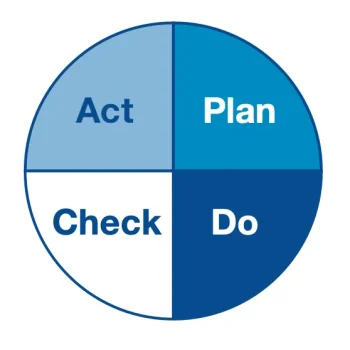
PDCA Model for Integrated Management Systems
The Plan-Do-Check-Act cycle applies across all three standards, enabling continuous improvement of security, privacy, and service management.
1. Plan – Unified Strategy Development
Before implementing controls, organizations identify risks across all dimensions and define integrated objectives.
Integrated Risk Assessments
- Pinpoint vulnerabilities in Confidentiality, Integrity, Availability (CIA) for data and services
- Identify privacy risks across personal data lifecycle
- Map service continuity risks and dependencies
Unified Risk Register
- Maintain a single repository of risks connected to services, assets, and PII processing
- Link DPIA requirements to privacy risk management
Integrated Policy Development
- Create overarching IMS policy with appendices for ITSM, ISMS, and PIMS
- Develop unified procedures for incident, change, and supplier management
2. Do – Unified Implementation
With a shared plan in place, organizations deploy integrated controls.
Unified Control Integration
- Deploy encryption, access management, monitoring tools, and service management processes
- Implement incident management covering service, security, and data breach events
- Establish change management with security and privacy reviews
Cross-Functional Training
- Train all staff on unified service, security, and privacy protocols
- Provide specialized training for roles handling PII and critical services
Integrated Documentation
- Maintain single audit-ready documentation repository covering all standards
3. Check – Unified Monitoring & Auditing
Security, privacy, and service delivery are not static—regular checks ensure continued effectiveness.
Integrated Internal Audits
- Identify gaps across all standards before external assessments
- Test interconnections between service, security, and privacy controls
Unified Performance Reviews
- Measure IMS effectiveness against integrated KPIs
- Track service, security, and privacy metrics in a single dashboard
Compliance Testing
- Verify adherence to ISO 27001, ISO 27701, and ISO 20000-1 requirements
4. Act – Integrated Refinement
The final phase turns insights into unified action.
Address Non-Conformities
- Correct weaknesses found in integrated audits
- Implement root cause analysis across all three domains
Update Unified Policies
- Adapt to new threats, regulatory changes, or business requirements
Plan Future Upgrades
- Keep the integrated management system ahead of emerging risks
- Maintain certification while continuously strengthening security, privacy, and service delivery
Applicable Clauses for
Implementation
Standard | Key Clauses for Integration |
ISO 27001:2022 | Context of Organization, Leadership, Planning, Support, Operation, Performance Evaluation, Improvement |
ISO 27701:2019 | Extension to ISO 27001, PIMS-specific requirements for PII controllers and processors, Privacy Principles, Roles of Controllers and Processors, PII Handling Requirements |
ISO 20000-1:2018 | Service Management System, Governance, Service Planning, Service Delivery, Service Relationship, Incident & Service Request, Change Management, Service Continuity |
All standards follow the ISO Annex SL High-Level Structure, enabling seamless integration of leadership, planning, support, operation, performance evaluation, and improvement clauses.
Flexible Certification Options
It is important to note that, while we highly recommend the integrated approach for its maximum synergy and efficiency, we fully understand that not every organization is ready to embark on a full IMS journey at once. Accordingly, Global Standards provides the flexibility to pursue each certification individually—whether you require ISO 27001 for information security management, ISO 27701 for privacy information management, or ISO 20000-1 for IT service management. This modular pathway enables you to strengthen your information security, privacy, and service management systems progressively, at a pace that aligns with your operational capacity, budgetary considerations, and strategic goals, while still benefiting from our expert guidance every step of the way.
Why Clients Trust Global Standards
Our clients consistently praise our efficiency and expertise. Google reviews and website testimonials highlight:
- Faster certification without compromising quality.
- Clear, jargon-free guidance at every step.
- Ongoing support post-certification.
One client stated:
“Global Standards got us certified in weeks, not months. Their team made compliance effortless.”
Phone:
General Landline: +92-21-32534937
Business Development: +92-306-2708496
Operations & Support: +92-308-2255440
Emails:
info@globalstandards.com.pk
business.dev@globalstandards.com.pk
training@globalstandards.com.pk
operation@globalstandards.com.pk
jobs@globalstandards.com.pk