
INTEGRATED MANAGEMENT SYSTEM
The Integrated Management System that grow the organization
QHSE Certification Services
QHSE Certification Services help organizations build and verify integrated Quality, Health, Safety, and Environment management systems that reduce operational risk, improve legal and customer compliance, protect people and the environment, and support credible certification across global markets.
Organizations now face higher expectations from customers, regulators, investors, employees, and supply-chain partners. They are expected to deliver consistent quality, prevent workplace incidents, manage environmental impact, and prove that these controls work in practice. A fragmented approach is no longer enough.
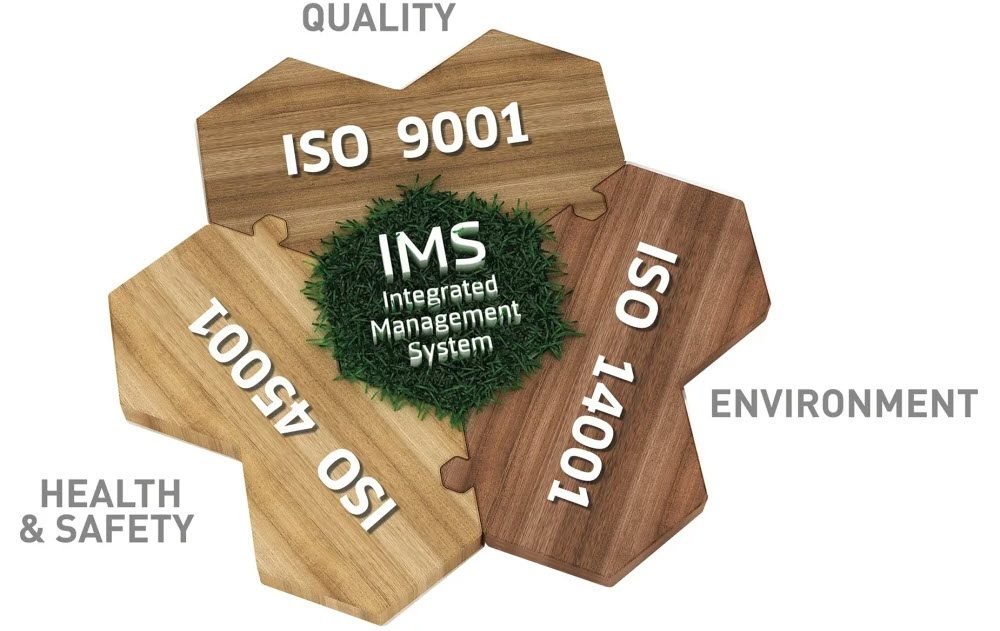
QHSE Certification brings quality, health, safety, and environmental management into one practical framework. It helps an organization align its operations with recognized international standards, commonly including ISO 9001 for quality management, ISO 14001 for environmental management, and ISO 45001 for occupational health and safety management.
Global Standards Certification provides end-to-end support for organizations seeking these certifications. From an early gap assessment through implementation, training, internal auditing, and certification readiness, the organization can receive clear guidance through a fast, straightforward, and manageable process. The objective is not merely to obtain a certificate. It is to establish a management system that improves daily performance and creates lasting business value.
The Strategic Value of QHSE Certification Services
An integrated QHSE system gives leadership a single structure for managing critical business responsibilities. Instead of running separate quality, safety, and environmental activities, organizations can use shared policies, common objectives, centralized records, and one improvement process.
This approach supports stronger governance in several ways:
- It improves product and service quality by defining processes, responsibilities, controls, and performance measures.
- It reduces health and safety risk by identifying hazards, training personnel, investigating incidents, and applying preventive action.
- It limits environmental impact through waste control, responsible resource use, pollution prevention, and compliance monitoring.
- It strengthens customer confidence by demonstrating that the organization follows recognized management standards.
- It helps organizations prepare for tenders, supplier approvals, international contracts, and regulatory inspections.
- It creates a culture of continual improvement, where decisions are based on evidence instead of assumptions.
QHSE systems are especially valuable in sectors with complex operations, large workforces, environmental exposure, strict client requirements, or high safety risks. These include manufacturing, energy, construction, logistics, food processing, healthcare, textiles, engineering, and professional services.
Global Standards Certification: Full-Scope Support
Global Standards Certification helps clients move from their current operating model to a certification-ready management system. The process is designed around the organization’s actual business activities, workforce, risks, and customer requirements. This keeps the system practical and avoids unnecessary documentation.
The organization receives support at every major stage, including initial diagnosis, policy development, process mapping, risk assessment, legal and compliance review, staff education, internal audits, corrective actions, and certification audit preparation.
The aim is to make QHSE Certification easier to understand and faster to achieve without compromising the integrity of the management system. Global Standards Certification helps leaders focus on the actions that create the greatest compliance and operational value first.
Global Standards Certification effort | Purpose and outcome |
Initial gap assessment | Reviews existing systems against applicable ISO requirements and identifies priority gaps. |
Project planning | Creates a clear implementation plan, responsibilities, timeline, and evidence requirements. |
Integrated documentation | Develops practical policies, procedures, registers, forms, and records tailored to the organization. |
Risk and opportunity assessment | Identifies quality, health, safety, environmental, legal, and operational risks. |
Awareness and competence training | Builds employee understanding of QHSE roles, controls, reporting, and improvement practices. |
Internal audit support | Tests whether the system is implemented effectively before the external certification audit. |
Corrective-action guidance | Helps close nonconformities and verify that improvements are effective. |
Management review support | Helps top management assess performance, resources, risks, objectives, and improvement needs. |
Certification-readiness assistance | Prepares the organization for a confident and organized external audit. |
Global Standards Certification reports a 100% successful results record across the sectors it supports, based on its guided implementation and certification-readiness approach. Results depend on active leadership involvement, timely access to information, employee participation, and the organization’s commitment to implementing agreed actions.
Service Coverage in the Middle East
QHSE Certification Services for the Middle East are designed for organizations operating in fast-growing, highly regulated, and project-driven markets. Businesses in the UAE, Saudi Arabia, Qatar, Oman, Kuwait, Bahrain, and neighboring countries often need strong QHSE systems to meet government regulations, contractor requirements, oil and gas expectations, construction controls, and international client standards.
Global Standards Certification supports Middle East organizations with scalable ISO 9001, ISO 14001, and ISO 45001 implementation. The service is relevant for construction firms, energy providers, manufacturers, logistics companies, facilities-management businesses, and service contractors. The focus is on practical compliance, workforce safety, environmental stewardship, tender eligibility, and reliable documentation for clients and authorities.
Service Coverage in America
Across North, Central, and South America, organizations face diverse regulatory requirements, customer audits, workforce expectations, and supply-chain standards. QHSE Certification Services can help companies create a consistent global system while adapting controls to local operating conditions.
Global Standards Certification supports American organizations seeking a structured route to certification and improved operational control. The approach helps manufacturers, food producers, energy businesses, exporters, warehouses, technology firms, and service providers strengthen quality assurance, occupational safety, and environmental performance. For organizations serving international customers, certification also provides a recognized signal of management maturity and accountability.
Service Coverage in Asia
Asia includes some of the world’s most active manufacturing, export, infrastructure, textile, food, logistics, and energy markets. Companies often need QHSE systems to satisfy buyer audits, international sourcing standards, national regulations, and workplace expectations.
Global Standards Certification assists organizations across Asia with a phased implementation model that fits their size and operational complexity. This is particularly valuable for growing businesses that need to formalize systems without disrupting production. Support can address process consistency, environmental controls, worker competence, waste reduction, energy efficiency, supplier management, and audit readiness. The objective is to help Asian organizations compete with confidence in local and global markets.
Service Coverage in Europe
European organizations operate in a compliance-focused business environment where customers, regulators, procurement teams, and stakeholders often expect clear evidence of quality, safety, environmental responsibility, and continual improvement. Strong QHSE management can support both legal compliance and commercial credibility.
Global Standards Certification supports European businesses with integrated systems that reflect their activities, risk profile, and certification goals. Manufacturers, exporters, professional service firms, food businesses, engineering companies, and supply-chain partners can use the service to strengthen operational control and meet international management-system expectations. The approach supports clear accountability, measurable objectives, documented evidence, and ongoing improvement.
Proven Sector Outcomes
Global Standards Certification has supported organizations across pharmaceutical, textile, energy, and food manufacturing sectors. These reported outcomes demonstrate how integrated quality, health, safety, and environmental systems can improve compliance, reduce environmental impact, strengthen workforce capability, and support sustainable growth.
| Sector & client | Primary focus / objective | Core intervention & key actions | Key results & impact |
|---|---|---|---|
Pharmaceutical Otsuka Pakistan Ltd | Transition to a unified Integrated Management System covering ISO 9001, ISO 14001, and ISO 45001; meet strict statutory requirements; and strengthen quality management performance. | Delivered executive leadership training to build a stronger quality culture. Streamlined documentation and removed redundant production steps. Deployed the Concentric tool to replace siloed documents with visual management tools. Embedded proactive risk management and error-prevention practices. | Achieved a reported 70% QMS improvement within six months. Supported faster regulatory approvals through compliant documentation. Improved supplier confidence and operational efficiency. |
Textile Nazeer Dyeing & Bleaching | Improve environmental management, raise employee competence, and reduce operational waste through a stronger management system. | Provided environmental-system guidance, employee education, competence development, and practical management-system improvement support. | Improved the environmental management system and employee competence. Used education and Global Standards Certification guidelines to transform management practices and generate less waste. |
Energy Sindh Nooriabad Power Company | Strengthen environmental policies, lower emissions, and align environmental performance with ISO 14001, supported by ISO 9001 and ISO 45001 principles. | Conducted a comprehensive environmental baseline assessment. Delivered targeted environmental stewardship training. Developed specialized emission-reduction policies. Provided executive coaching to embed eco-friendly practices into core operations. | Achieved a reported 45% improvement in emissions performance within four months. Strengthened its position as a responsible industry leader in environmental stewardship. |
Food Manufacturing Viscolloids Industries | Advance its Triple Bottom Line—People, Planet, and Profit—and Zero Waste Policy through full IMS integration across ISO 9001, ISO 14001, and ISO 45001. | Provided end-to-end training, consultation, and internal auditing. Focused on reducing waste generation and high energy consumption. Integrated health, safety, and environmental best practices into the existing quality framework. | Achieved a reported up to 35% reduction in overall environmental footprint. Mitigated legacy environmental risks and strengthened long-term sustainability and compliance commitments. |
These outcomes show that QHSE Certification Services can create measurable business value beyond audit readiness. With leadership commitment, targeted training, robust documentation, and continual monitoring, organizations can improve compliance, reduce waste and emissions, protect people, and build stronger operational systems.
Benefits Of IMS Certification
1. Streamlined Efficiency & Less Redundancy
Managing separate management systems means duplicating paperwork, meetings, and processes. An IMS consolidates these elements, saving massive amounts of time and effort.
- Unified Documentation: One set of procedures, manuals, and policies covers all standards, eliminating conflicting protocols.
- Simplified Audits: Instead of hosting separate certification bodies multiple times a year, you undergo a single integrated audit, drastically cutting down on operational disruption.
2. Significant Cost Savings
Operating a single system naturally reduces overhead costs across the board.
- Lower Certification Fees: Combined audits mean fewer auditor days on-site, leading to substantially lower certification and maintenance fees compared to individual audits.
- Optimized Resources: Employees spend less time managing paperwork and more time focused on core business operations.
3. Unified Risk Management
An IMS provides a holistic view of organizational risk. Instead of looking at quality defects, environmental impacts, or workplace hazards in isolation, leadership can assess how a decision affects all three areas simultaneously. This prevents solutions in one department from creating problems in another.
4. Elevated Corporate Reputation & Market Access
International clients and regulatory bodies look highly upon integrated systems because they demonstrate a mature, well-governed organization.
- Competitive Edge in Tenders: Many high-value public and private sector tenders require multiple certifications. An IMS signals compliance instantly.
- Consistent Brand Image: It shows a balanced commitment to quality, environmental sustainability, and worker welfare.
5. Culture of Continuous Improvement
Because the High-Level Structure (HLS) of modern ISO standards is identical, an IMS embeds a uniform culture of performance tracking. A single management review meeting can evaluate all business objectives at once, ensuring that quality, safety, and environmental goals move forward together.
The Core Advantage:
An IMS removes the internal friction of competing priorities. It ensures that your commitment to quality doesn’t come at the expense of worker safety or environmental responsibility.
The IMS is Based on the Core Management Principles Shown Below:
- Focus on stakeholders, safety, and sustainability: Expanding from just “customers” to include employees, communities, and regulatory bodies affected by quality, environmental, and safety impacts.
- Demonstrate unified leadership and commitment: Emphasizing a top-down leadership culture that treats quality, health, safety, and environmental responsibility as equal priorities.
- Engage, empower, and protect your people: Moving beyond basic involvement to active consultation and participation of workers, ensuring their well-being and safety.
- Utilize an integrated process approach: Managing interconnected business, environmental, and safety workflows as a single, cohesive system rather than fragmented silos.
- Drive continuous improvement across all disciplines: Continually optimizing performance, reducing waste, preventing incidents, and enhancing product quality simultaneously.
- Make evidence- and risk-based decisions:Relying on integrated data, environmental aspects, hazards assessments, and performance metrics to make informed operational choices.
- Manage holistic and mutually beneficial relationships: Collaborating with suppliers, contractors, and partners to ensure shared compliance, safety standards, and sustainable practices.
New Methodology Of PDCA Model
Structure
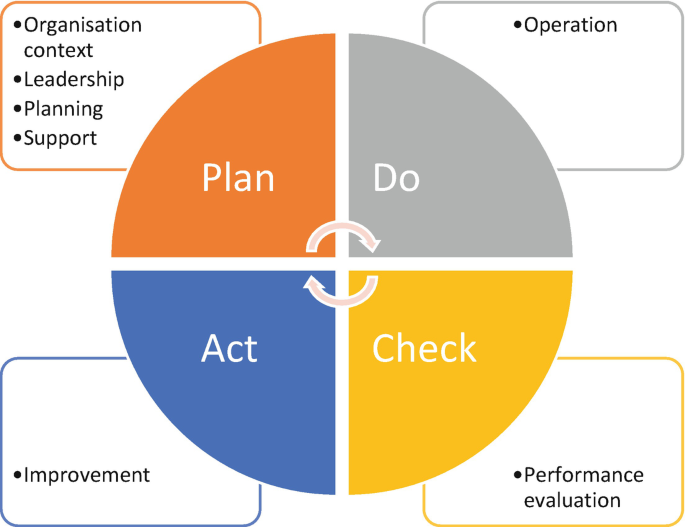
An Integrated Management System (IMS) uses Annex SL’s Harmonized Structure (HS). This framework serves as the blueprint for ISO 9001, 14001, and 45001. It seamlessly combines quality, environmental, and safety protocols into a single system..
Adopting this integrated approach delivers three core advantages:
- Cross-Standard Consistency: Synchronizes core requirements across different disciplines, eliminating redundant procedures.
- Unified Alignment: Fully aligns distinct management systems under a shared strategic direction.
- Standardized Terminology: Harmonizes definitions, sub-clauses, and structural elements to drastically reduce compliance complexity.
- This shared framework lets organizations implement, maintain, and audit multiple standards efficiently without working in isolated silos .
Core Clauses for IMS Implementation
The Harmonized Structure outlines core clauses (4 to 10) forming the backbone of an integrated PDCA cycle:
Context of the Organization
Mapping out internal/external issues and stakeholder expectations across all standards.
Leadership
Demonstrating top management’s unified commitment and assigning cross-functional responsibilities.
Planning
Mapping out shared risks, environmental aspects, hazards, and unified organizational objectives.
Support
Managing resources, competence, awareness, and centralized documented information.
Operation
Executing integrated operational controls and emergency response plans.
Performance Evaluation
Monitoring, measuring, and conducting joint internal audits and management reviews.
Improvement
Driving continuous improvement through consolidated corrective actions.
Tentative Timeline and Project Pricing
Every organization is different. The final timeline and pricing depend on employee count, number of sites, current documentation, operational risks, selected ISO standards, and readiness level. The figures below provide an indicative project range in PKR for integrated QHSE implementation support.
Project scale | Typical organization profile | Tentative timeline | Indicative project price |
Small | One site, up to 50 employees, limited process complexity | 8–12 weeks | PKR 350,000–550,000 |
Medium | One to three sites, 51–250 employees, moderate operational risk | 12–18 weeks | PKR 650,000–1,200,000 |
Large | Multiple sites, 251–750 employees, complex processes or higher risk | 18–28 weeks | PKR 1,300,000–2,500,000 |
Enterprise | Multiple locations, more than 750 employees, extensive operational and regulatory scope | 28–40 weeks | PKR 2,800,000 onward |
The above prices are tentative consultancy and implementation-support estimates. Certification body audit fees, travel, laboratory testing, regulatory charges, and specialist services may be quoted separately where applicable.
Flexible Certification Options
It is important to note that, while we highly recommend the integrated approach for its maximum synergy and efficiency, we fully understand that not every organization is ready to embark on a full IMS journey at once. Accordingly, Global Standards provides the flexibility to pursue each certification individually—whether you require ISO 9001 for quality management, ISO 14001 for environmental stewardship, or ISO 45001 for occupational health and safety. This modular pathway enables you to strengthen your management systems progressively, at a pace that aligns with your operational capacity, budgetary considerations, and strategic goals, while still benefiting from our expert guidance every step of the way.
How Global Standards Certification Can Help
Global Standards Certification can fully assist organizations from the first assessment through certification readiness. Their support can include identifying suitable standards, reviewing current practices, developing an integrated management system, training employees, conducting internal audits, and preparing the business for an independent certification audit.
The aim is to make the route to certification as fast and easy as practical without compromising the quality of the system. The timeline will depend on the organization’s size, existing controls, number of sites, and readiness. However, focused guidance and a clear action plan can remove avoidable delays and keep the work moving.
Global Standards Certification helps businesses avoid common problems, such as generic documentation, weak evidence, unclear responsibilities, and unclosed audit findings. With practical assistance, leaders can build a system that meets certification requirements while also improving the way the organization operates.
A Practical Route to Long-Term Value
QHSE Certification is most valuable when it improves daily decisions, not when it exists only for a certificate on the wall. The process should give leaders clearer data, employees safer work, customers greater confidence, and the organization a stronger basis for sustainable growth.
With the right scope, practical implementation, and support from Global Standards Certification, businesses in the Middle East, America, Asia, and Europe can achieve certification efficiently and maintain a system that continues to deliver value.
FAQ’s
What is an Integrated Management System (IMS)?
An Integrated Management System combines multiple management system standards typically ISO 9001 (Quality), ISO 14001 (Environment), and ISO 45001 (Occupational Health & Safety) into a single, unified framework to streamline operations, lower costs, and reduce risks.
What are the main benefits of achieving IMS Certification?
Key benefits include streamlined documentation, reduced audit disruption, lower overall certification fees, unified risk management across quality, safety, and environmental domains, enhanced corporate reputation in tenders, and a unified culture of continuous improvement.
Can an organization pursue ISO certifications individually instead of a full IMS?
Yes. Global Standards Certification provides modular pathways allowing organizations to pursue individual certifications (e.g., ISO 9001, ISO 14001, or ISO 45001) step-by-step based on operational capacity and budget constraints.
What is the typical timeline and cost for implementing an Integrated Management System?
Timelines and costs vary by organization size:
- Small (up to 50 employees, 1 site): 8–12 weeks; PKR 350,000–550,000.
- Medium (51–250 employees, 1–3 sites): 12–18 weeks; PKR 650,000–1,200,000.
- Large (251–750 employees, multi-site): 18–28 weeks; PKR 1,300,000–2,500,000.
Enterprise (750+ employees, multi-location): 28–40 weeks; PKR 2,800,000 onward.
(Note: Pricing covers consultancy and implementation support; external audit fees are separate.)
What framework or model is used to structure the IMS implementation?
The IMS uses the Annex SL Harmonized Structure (HS) based on the Plan-Do-Check-Act (PDCA) cycle. It standardizes core clauses (Clauses 4 through 10), terminology, and requirements across ISO 9001, 14001, and 45001.
In which regions does Global Standards Certification offer coverage?
Global Standards Certification supports organizations across the Middle East (UAE, Saudi Arabia, Qatar, Oman, Kuwait, Bahrain), America, Asia, and Europe.
Phone:
General Landline: +92-21-32534937
Business Development: +92-306-2708496
Operations & Support: +92-308-2255440
Emails:
info@globalstandards.com.pk
business.dev@globalstandards.com.pk
training@globalstandards.com.pk
operation@globalstandards.com.pk
jobs@globalstandards.com.pk