
INTEGRATED MANAGEMENT SYSTEM
(iMS) CERTIFICATION
Integrated Management System
Achieving Global Market Access through HALAL, HACCP, ISO 22000 and FSSC 22000 Certification Services
The global demand for Halal-certified products has grown exponentially, thereby creating unprecedented opportunities for businesses across multiple sectors. Consequently, organizations must adopt robust food safety and compliance frameworks that simultaneously address religious dietary requirements alongside international quality standards. To address this need, this white paper introduces our integrated HALAL, HACCP, ISO 22000, and FSSC 22000 Certification Services as the definitive solution for market access and operational excellence. Specifically, by utilizing a unified IMS framework, Global Standards helps you consolidate distinct compliance tracks into a single, streamlined operation. Furthermore, inside we detail our proven methodology and present three case studies, ultimately demonstrating how an integrated approach drives performance improvements, export readiness, and market competitiveness.

The Strategic Evolution of Halal and Food Safety Management
Here is the revised text with transition words embedded throughout to connect every single sentence and idea smoothly:
Previously, Halal Certification was viewed merely as a niche food requirement. However, it now spans both food and non-food sectors like pharmaceuticals, logistics, cosmetics, and tourism, subsequently impacting the global economy on a major scale. In addition, by integrating Halal Certification with food safety standards (HACCP, ISO 22000, and FSSC 22000) through a unified IMS approach, companies can efficiently access a £1.5 trillion global market across 180 countries. Accordingly, we at Global Standards believe that true market readiness requires a deep commitment to both food safety and religious compliance. For this reason, we champion this integration specifically to facilitate a seamless operational transition for businesses.
Furthermore, achieving Halal Certification is a strategic decision that effectively builds consumer trust and unlocks new export opportunities. In regards to its foundation, the core Halal philosophy is quite simple: everything is permitted except ABCD IS Haram (Alcohol, Blood, Carnivorous animals, Dead meat, Food immolated unto idols, and Swine). Ultimately, this certification journey transforms standard management practices into a cohesive system that simultaneously meets both Sharia compliance and food safety standards. Consequently, organizations benefit from enhanced market access, a stronger competitive advantage, and greater stakeholder confidence. In conclusion, when Global Standards guides you through IMS Certification, the final result is a powerful synergy that maximizes performance across every operational facet.
Global Standards' Methodology for Guaranteed Success
In particular, Global Standards distinguishes itself through a structured, three-phase implementation strategy that guarantees results.
Capacity Building And Education Phase
Initially, we begin with a comprehensive capacity-building phase to educate the organization’s leadership and workforce on Halal requirements and food safety standards. Our trainers deliver customized workshops covering the specific requirements of each certification, ensuring every employee understands their role in maintaining Halal integrity and food safety.
Documentation And Implementation Phase
Following this, our experts assist in the implementation phase by developing Halal policy manuals, standardized procedures, process mapping, and key performance indicators. We work closely with management teams to align existing procedures with Halal Certification requirements, creating a unified operational framework that integrates HACCP principles and ISO 22000 requirements. Consequently, the integration of these systems eliminates parallel and duplicate practices, helping organizations achieve both operational efficiency and audit effectiveness.
Internal Auditing And Performance Evaluation Phase
Finally, we conduct a thorough performance evaluation and internal auditing phase to ensure readiness for the final certification audit. Additionally, our approach prioritizes addressing specific risks and opportunities that affect an organization’s Halal compliance. Food safety performance, and stakeholder satisfaction. To ensure continuous improvement. We also actively welcome feedback and thoroughly investigate any concerns, providing effective solutions to drive further progress.
Sectoral Success Stories: Evidence of 100% Results
Food Manufacturing Sector: Consumer Foods International (Pvt) Ltd.
The Challenge & Objective
Consumer Foods International (Pvt) Ltd. faced challenges aligning its production and sourcing with strict Halal standards, a crucial requirement for entering Middle Eastern and Southeast Asian markets. To elevate its operations and achieve seamless compliance, the company partnered with Global Standards.
The Strategy & Outcomes
Global Standards implemented a rigorous program including a standardized Halal policy manual, intensive staff training, and comprehensive internal audits. As a result, Consumer Foods International achieved a 50% improvement in compliance, optimized its supply chain, and successfully boosted its reputation with international clients.
Cosmetic Sector: 786 COSMETICS
Industry Hurdles & Partnership
The cosmetics industry faces unique Halal challenges, particularly regarding ingredient purity and supply chain contamination. Recognizing the need to overhaul its production lines, 786 COSMETICS engaged Global Standards to safely align its operations with official Halal requirements.
Expert Intervention & Rapid Transformation
Global Standards deployed experts to audit ingredient lists, replace non-compliant substances, and conduct staff mock audits. Within just 2–3 months, 786 COSMETICS achieved a remarkable 75% transformation in Halal compliance, rapidly securing its position as a trusted leader in Halal-conscious markets.
Export Sector: AR SALT CO
Global Standards & Export Readiness
For exporters, Halal certification is often a strict prerequisite for entering Muslim-majority markets. To enhance its international readiness, leading salt exporter AR SALT CO partnered with Global Standards for end-to-end certification services and regulatory inspection prep.
Streamlined Process & Market Penetration
Global Standards streamlined the company’s documentation, enhanced sourcing traceability, and delivered rigorous compliance training. Consequently, AR SALT CO achieved a 35% improvement in export readiness. Successfully penetrating new global markets and boosting its international revenue.
Benefits of Integrated Food Safety & Halal Standards
- Greater Global & Local Market Impact: Open doors to international markets and premium consumer segments by simultaneously fulfilling strict global food safety standards and trusted Halal compliance guidelines.
- Enhanced Regulatory Transparency: Build absolute trust with regulators, clients, and consumers through clear, dual-track transparency in both supply chain safety and Shariah-compliant integrity.
- Streamlined & Harmonized Production: Eliminate operational friction by combining food safety protocols and Halal production requirements into a single, unified manufacturing workflow.
- Comprehensive Minimization of Food & Compliance Risks: Minimize critical biological, chemical, and physical food hazards while actively mitigating any risk of Halal cross-contamination.
- Effective, Centralized Control of Internal Processes: Manage your prerequisite programs (PRPs), CCPs, and Halal Control Points (HCPs) under one centralized dashboard, reducing duplicate paperwork.
- Boosted Staff Motivation & Awareness: Cultivate a strong corporate culture centered on food safety and Halal mindfulness, clarifying roles for operations and processing teams.
- Unwavering Focus on Core Operational Challenges: Save valuable administrative time and manpower by running a single, integrated framework instead of juggling four disconnected systems.
- Reduced Cost of Non-Conformities: Detect operational deviations early to drastically lower the expenses associated with product recalls, rejected shipments, or compliance breaches.
The Industries Relevant To:
Our integrated framework is strategically tailored to drive compliance, trust, and growth across the entire food supply chain:
- Farmers & Primary Growers
- Feed & Agricultural Producers
- Food Manufacturers, Processors, & Packagers
- Food Ingredient & Additive Producers
- Food Storage, Logistics, & Distribution Organizations
- Caterers & Hospitality Providers
- Food Service Operators (including restaurants, commercial kitchens, and fast-food outlets)
- Wholesalers & Retailers
Why Choose Global Standards for Integrated Certification?
Integradted certification is a game-changer for food safety and business growth. Global Standards stands out as a reliable service provider, delivering 100% certification success with measurable improvements. Our hands-on approach—combining training, documentation, and auditing—ensures seamless compliance.
Whether it’s AWS & Co, Alnafay Dates, or Consumer Foods International, Global Standards has consistently driven 70%+ enhancements in food safety systems. By choosing them, businesses not only achieve Food Safety Certification but also build long-term operational resilience.
For organizations ready to elevate our food safety standards, Global Standards offers the expertise, credibility, and results to make it happen. Visit our website to explore client testimonials and start your certification journey today!
Global Standards’ Approach to Integrated Food Safety & Halal Certification
Global Standards follows a structured, client-centric methodology to guarantee your certification success. Our unified process includes:
- Gap Analysis & Integrated Planning – Initially, our experts assess your existing infrastructure against ISO 22000, FSSC 22000, HACCP, and Halal requirements. Consequently, we develop a customized, strategic roadmap for total compliance.
- Integrated Documentation & Manuals – Next, we create comprehensive, integrated food safety policies, technical manuals, and procedural guidelines tailored to your organization’s needs, blending global food safety standards with strict Halal assurance protocols.
- Training & Competency Development – Subsequently, we conduct targeted training sessions to enhance staff expertise, covering food safety cultures, hazard management, and critical Halal compliance rules for handlers and operations teams.
- Internal Audits & Pre-Certification Checks – Finally, we perform rigorous integrated internal audits to verify both technical food safety parameters and Halal integrity, ensuring absolute readiness for the official certification audit.
By following this approach, Global Standards ensures a smooth, stress-free certification process with guaranteed results.
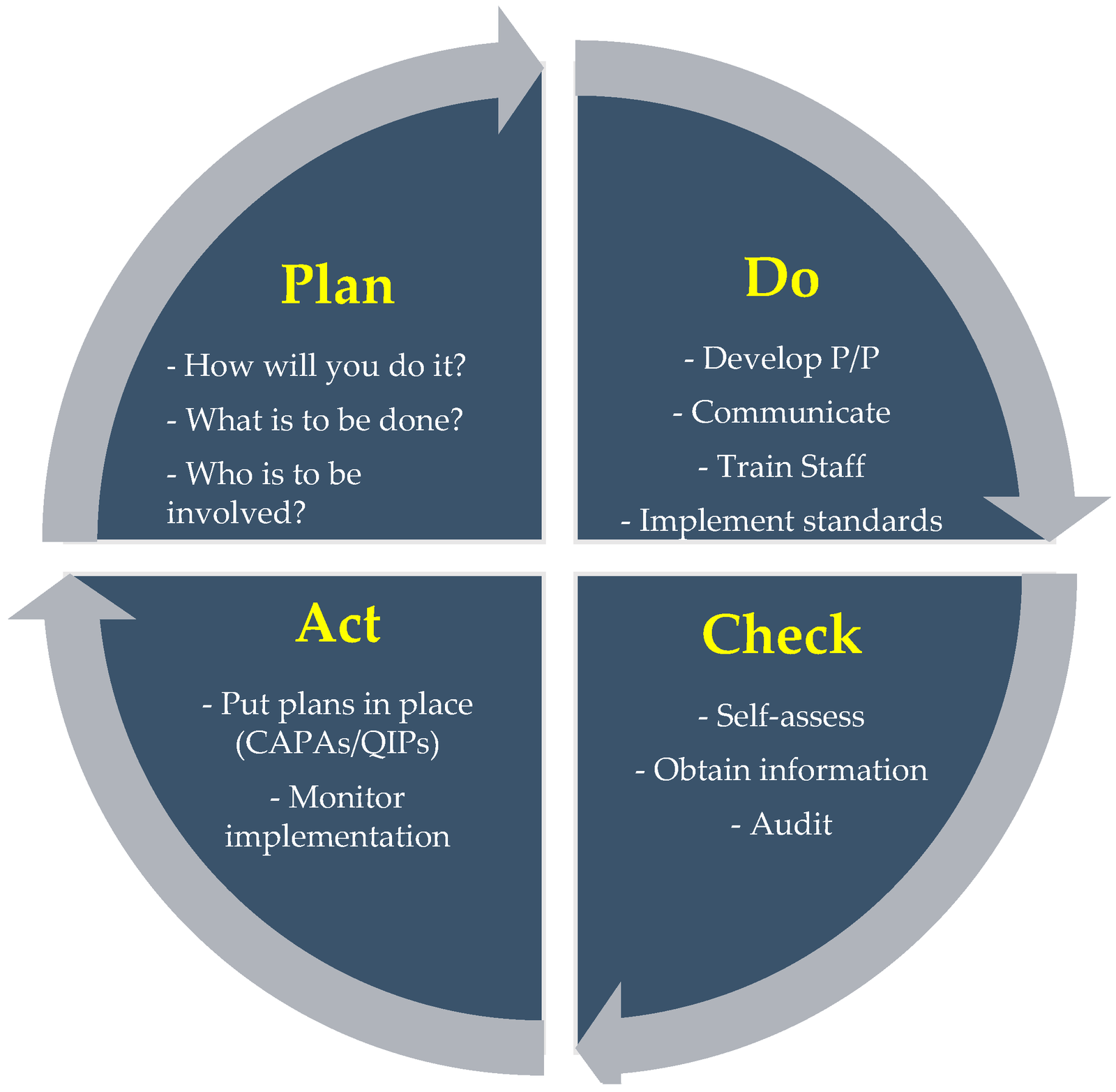
New Methodology Of PDCA Model
Structure
An Integrated Management System (IMS) combines ISO 22000, FSSC 22000, HACCP, and Halal Certification into a single, cohesive framework. By leveraging the Harmonized Structure (HS) of global food standards, this modernized approach offers three key advantages.
First, it ensures absolute consistency between strict technical food safety benchmarks and religious Halal compliance guidelines. Second, it enables full strategic alignment, merging your food safety and Halal quality systems into a single, cohesive corporate workflow. Third, it harmonizes sub-clauses, prerequisite programs (PRPs), and documentation.
As a result, food businesses can achieve smooth, simultaneous certifications while minimizing compliance friction, duplicate documentation, and audit management efforts.
Applicable Clauses For Implementation
- Context of Organization: Defining operational scope, food safety hazards, and Halal critical requirements.
- Leadership: Management commitment to enforcing global food safety cultures and Halal integrity.
- Planning: Risk assessment, establishing food safety objectives, and identifying Halal Control Points (HCPs) alongside CCPs.
- Support: Allocating resources, competence training for slaughterers/handlers, and robust communication channels.
- Operation: Implementing PRPs, hazard analysis, traceability tracks, and operational control over both safety and Halal processing.
- Performance Evaluation: Combined internal auditing, monitoring of CCPs/HCPs, and structured management reviews.
- Improvement: Deploying Corrective and Preventive Actions (CAPA) to drive continuous improvement across all integrated standards.
Certification Audit Timeline & Process
Step 1: Application & Document Review
First, the organization submits a comprehensive application for the integrated framework. Next, the certification body reviews the organization’s existing Integrated Management System (IMS) documentation. Then, the auditor checks for complete compliance across ISO 22000, FSSC 22000, HACCP protocols, and Halal guidelines (including raw material sourcing and Halal assurance manuals). If the documentation successfully meets all standards, the process proceeds to the next stage.
Step 2: Stage 1 Audit (Readiness Review)
During this phase, the auditor evaluates whether the organization has effectively implemented the baseline requirements of the food safety and Halal systems. The auditor identifies any operational gaps, documentation misses, or potential cross-contamination risks, and provides detailed feedback. Afterward, the organization addresses these identified issues before moving to Stage 2.
Step 3: Stage 2 Audit (Certification Audit)
Here, the audit team conducts an intensive on-site assessment to verify that the integrated system operates seamlessly on the facility floor. The auditors examine production processes, interview staff, review traceability records, and inspect critical control points (CCPs/OPRPs) alongside Halal Control Points (HCPs). Following the comprehensive evaluation, the auditors report findings, including any major or minor non-conformities.
Step 4: Corrective Actions & Closure
If the auditors find any non-conformities regarding technical food safety or Halal integrity, the organization must take swift corrective actions. Once completed, the organization submits concrete evidence of these corrections to the certification body. Subsequently, the lead auditor reviews the corrections and officially confirms total compliance.
Step 5: Certification Decision
After successful completion of all audit stages, the certification body’s technical committee reviews the final audit results. Finally, if the organization meets all integrated benchmarks, the certification body issues the formal certificates for ISO 22000, FSSC 22000, HACCP, and Halal Certification.
Step 6: Surveillance Audits & Recertification
To maintain certified status, the organization undergoes annual surveillance audits to ensure ongoing food safety compliance and continuous Halal assurance. Every three years, the organization must complete a comprehensive recertification audit cycle to successfully renew all integrated standards.
Flexible Certification Options
While we highly recommend an integrated approach for maximum efficiency. We understand that not every organization is ready for a full IMS journey. Global Standards provides the flexibility to pursue individual certifications (ISO 22000, FSSC 22000, HACCP, or Halal) through a modular pathway. This allows you to build your food safety and quality management systems progressively. At a pace that aligns with your operational capacity, budget, and strategic goals.
Client Testimonials & Public Recognition
Global Standards takes pride in its 100% success rate and client satisfaction. Many organizations have shared glowing reviews on Google, feedback forms, and the company’s testimonial section. Clients consistently highlight:
- Expert guidance in achieving Integrated certification
- Customized training programs that enhance staff competency
- Efficient documentation & compliance support
These testimonials reinforce Global Standards’ reputation as a trusted partner in Food Safety Certification.
FAQ’s
1. What is an Integrated Management System (IMS) Certification?
An Integrated Management System (IMS) combines multiple compliance and management standards such as ISO 22000, FSSC 22000, HACCP, and Halal Certification into a single, cohesive operational framework. This eliminates duplicate paperwork, streamlines audits, and aligns religious dietary requirements with international food safety benchmarks.
2. What certifications are included in Global Standards’ integrated framework?
Global Standards integrates four core standards into a unified framework:
- Halal Certification (Religious compliance & Shariah integrity)
- HACCP (Hazard Analysis and Critical Control Points)
- ISO 22000 (Food Safety Management Systems)
- FSSC 22000 (Food Safety System Certification)
3. What are the key benefits of combining Halal and Food Safety Certifications?
Integrating Halal and food safety standards offers several strategic advantages:
- Global Market Access: Opens export opportunities across a £1.5 trillion global market in over 180 countries.
- Operational Efficiency: Combines prerequisite programs (PRPs), CCPs, and Halal Control Points (HCPs) into one centralized system.
- Cost Reduction: Drastically lowers expenses tied to non-conformities, audit management, and product recalls.
- Enhanced Transparency: Mitigates both food safety hazards and Halal cross-contamination risks simultaneously.
4. How does Global Standards implement the IMS Certification process?
Global Standards follows a structured three-phase methodology:
- Capacity Building & Education Phase: Customized workshops and workforce training on Halal and food safety standards.
- Documentation & Implementation Phase: Development of integrated policy manuals, process mapping, and alignment with HACCP/ISO requirements.
- Internal Auditing & Performance Evaluation Phase: Rigorous pre-certification mock audits, risk management, and continuous improvement adjustments.
5. What is the step-by-step process for an IMS Certification audit?
The certification audit consists of six structured steps:
- Step 1: Application & Document Review – Initial verification of system manuals and sourcing compliance.
- Step 2: Stage 1 Audit (Readiness Review) – Identification of operational gaps and baseline compliance check.
- Step 3: Stage 2 Audit (Certification Audit) – Intensive on-site assessment of facility operations, CCPs, and HCPs.
- Step 4: Corrective Actions & Closure – Addressing and resolving any audit non-conformities.
- Step 5: Certification Decision – Technical review and formal issuance of ISO 22000, FSSC 22000, HACCP, and Halal certificates.
- Step 6: Surveillance & Recertification – Annual surveillance audits and a full recertification cycle every 3 years.
6. Which industries benefit from IMS Certification?
The integrated framework is designed for the entire food supply chain and related sectors, including:
- Farmers & Primary Growers
- Feed & Agricultural Producers
- Food Manufacturers, Processors, & Packagers
- Ingredient & Additive Producers
- Storage, Logistics, & Distribution Providers
- Caterers, Hospitality, & Food Service Operators
- Cosmetics, Pharmaceuticals, & Personal Care Brands
7. Can an organization pursue individual certifications instead of a full IMS?
Yes. While an integrated approach provides maximum efficiency, Global Standards offers a flexible, modular pathway allowing organizations to pursue individual certifications (ISO 22000, FSSC 22000, HACCP, or Halal) at their own pace based on budget, operational capacity, and goals.
Phone:
General Landline: +92-21-32534937
Business Development: +92-306-2708496
Operations & Support: +92-308-2255440
Emails:
info@globalstandards.com.pk
business.dev@globalstandards.com.pk
training@globalstandards.com.pk
operation@globalstandards.com.pk
jobs@globalstandards.com.pk