
INTEGRATED MANAGEMENT SYSTEM WHITE PAPER
The Integrated Management System that grow the organization
Achieving Organizational Excellence through Integrated Certification Services
To begin with, the modern business environment demands more than just a singular focus on quality or safety. Consequently, organizations must adopt a holistic approach to management that simultaneously addresses quality, environmental impact, and occupational health. This white paper introduces “Integrated Certification Services” as the definitive solution for sustainable growth, showcasing how Global Standards serves as the strategic partner for organizations aiming to achieve this pinnacle of operational excellence. Furthermore, this document details our proven methodology and presents three compelling case studies that demonstrate 100% successful results across diverse sectors, confirming that an integrated approach not only ensures compliance but also drives significant performance improvements.
The Business Case for Integration
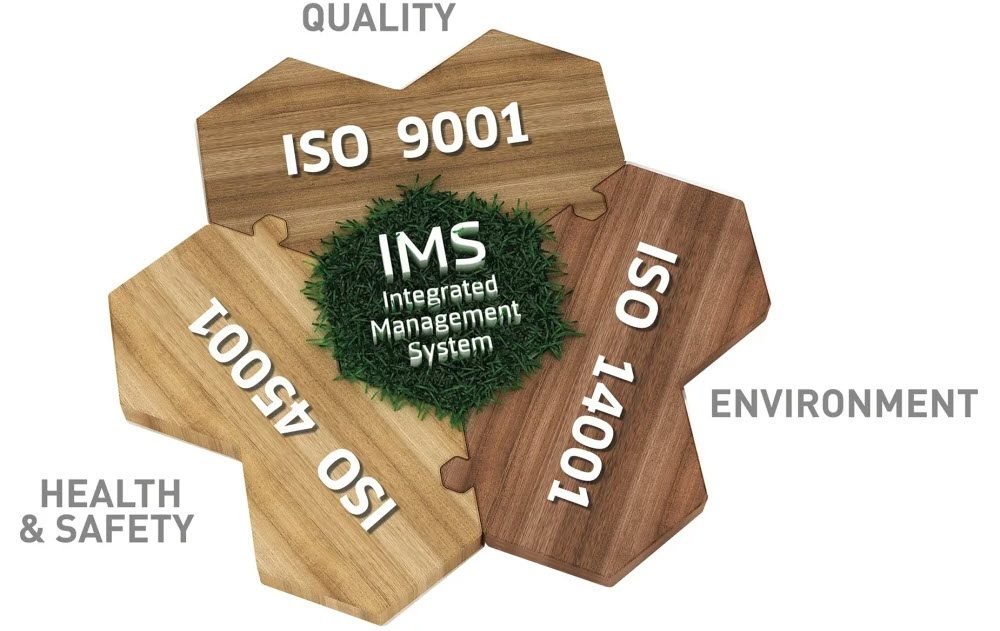
Previously, many organizations managed quality, environmental, and safety systems in silos, leading to redundancy and inefficiency. However, an Integrated Management System (IMS) synthesizes these functions into a single, cohesive framework. Specifically, by pursuing IMS certification, which encompasses standards like ISO 9001, ISO 14001, and ISO 45001, companies can streamline their processes, reduce costs, and enhance their reputation. Moreover, the leadership at Global Standards firmly believes that true sustainability requires a commitment to both employee well-being and environmental stewardship, which is precisely why we champion the integration of Quality, Health, Safety, and Environmental management systems. This is where Global Standards steps in to facilitate a seamless transition.
For instance, achieving IMS certification is not merely about obtaining a certificate; instead, it is a strategic decision to build a resilient organization. According to industry experts, an IMS provides a robust framework for achieving excellence, fulfilling intended outcomes, and ensuring customer satisfaction. Similarly, the certification journey often transforms management practices into a cohesive system that meets global standards for quality, environmental stewardship, and occupational health and safety. Consequently, we find that organizations achieving IMS certification benefit from enhanced operational continuity, significant waste reduction, and improved stakeholder confidence. To put it another way, when Global Standards guides an organization, the result is a powerful synergy that maximizes performance in every operational facet.
Global Standards’ Methodology for Guaranteed Success
In particular, Global Standards distinguishes itself through a structured, three-phase implementation strategy that guarantees results.
Capacity Building and Education Phase
Initially, we begin with a comprehensive capacity-building phase where we educate the organization’s leadership and workforce on the nuances of the integrated standards. Our trainers deliver customized workshops that cover the specific requirements of each standard, ensuring every employee understands their role in the integrated system.
Implementation and Documentation Phase
Following this, our experts assist in the implementation phase, which involves developing customized documentation, process mapping, and establishing key performance indicators. We work closely with management teams to align existing procedures with the requirements of IMS certification, creating a unified operational framework.
Internal Auditing and Performance Evaluation Phase
Finally, we conduct a thorough performance evaluation and internal auditing phase to ensure readiness for the final certification audit. Additionally, our approach prioritizes addressing specific risks and opportunities that affect an organization’s quality, environmental performance, and stakeholder satisfaction. To ensure continuous improvement, we also actively welcome feedback and thoroughly investigate any concerns, providing effective solutions to drive further progress.
Sectoral Success Stories: Evidence of 100% Results
Textile Sector: Nazeer Dyeing & Bleaching
In the demanding textile industry, environmental compliance is paramount. Nazeer Dyeing & Bleaching, a major player in the export-oriented textile industry, has long been dedicated to meeting international standards, holding certifications such as ISO 9001 and ISO 14001. However, they sought to elevate their environmental performance further by transforming their management system to minimize waste generation and enhance employee competence. Therefore, they engaged Global Standards to achieve IMS certification.
Consequently, Global Standards implemented a rigorous education and training program for their workforce, aligning their operational procedures with the highest environmental and quality standards. Furthermore, our team provided clear guidelines to overhaul their existing management framework. As a result of this targeted intervention, Nazeer Dyeing & Bleaching successfully transformed its operations, achieving a demonstrable reduction in waste. They now operate a more efficient system that not only benefits the environment but also enhances their reputation with international clients. Their commitment to our process and the subsequent positive results reflect the success stories seen across the industry, where integrating management systems has led to tangible improvements in environmental performance and quality.
Energy Sector: Sindh Nooriabad Power Company
Next, the energy sector is under immense pressure to mitigate its environmental impact. Sindh Nooriabad Power Company, operating in a region with a growing focus on renewable energy and sustainability, recognized the need to adopt more robust environment-friendly policies. They selected Global Standards to provide specialized services for ISO 14001 certification and ISO 45001 certification. Our primary objective for them was to improve their environmental and safety management system and reduce emissions.
Subsequently, Global Standards deployed a team of environmental safety experts to conduct a thorough baseline assessment. We then delivered targeted training sessions on environmental safety stewardship and developed policies focused on emission reduction. Additionally, our leadership coaching enabled them to integrate these environment-friendly policies into their core operations effectively. The outcome was nothing short of remarkable: within just four months of our engagement, Sindh Nooriabad Power Company achieved a 45% improvement in their emissions performance. This substantial reduction demonstrates how our targeted intervention and expert guidance can quickly yield significant environmental returns, positioning them as a responsible leader in the sector.
Food Manufacturing Sector: Viscolloids Industries
Finally, the food manufacturing sector faces unique challenges regarding waste generation and energy consumption. Viscolloids Industries, a producer of guar gum and its derivatives, operates with a strong commitment to environmental sustainability, embracing a Triple Bottom Line approach (People, Planet, Profit). Their commitment includes a Zero Waste Policy and compliance with all environmental regulations. To advance their sustainability goals further, they chose Global Standards to provide Integrated Management System (IMS) services.
Therefore, Global Standards delivered a comprehensive suite of services, including extensive training, expert consultation, and rigorous internal auditing. Our approach focused specifically on mitigating their environmental issues related to waste generation and energy consumption. We helped them implement best practices to align their operations with the requirements of ISO 14001 and ISO 45001, integrated into their existing quality framework. As a direct consequence of our partnership, Viscolloids Industries achieved a progressive change of up to 35% in reducing their environmental footprint, successfully mitigating the environmental issues that had previously impacted their operations. This case clearly shows how IMS certification transforms an organization’s performance and solidifies its long-term commitment to sustainability.
Benefits Of IMS Certification
1. Streamlined Efficiency & Less Redundancy
Managing separate management systems means duplicating paperwork, meetings, and processes. An IMS consolidates these elements, saving massive amounts of time and effort.
- Unified Documentation: One set of procedures, manuals, and policies covers all standards, eliminating conflicting protocols.
- Simplified Audits: Instead of hosting separate certification bodies multiple times a year, you undergo a single integrated audit, drastically cutting down on operational disruption.
2. Significant Cost Savings
Operating a single system naturally reduces overhead costs across the board.
- Lower Certification Fees: Combined audits mean fewer auditor days on-site, leading to substantially lower certification and maintenance fees compared to individual audits.
- Optimized Resources: Employees spend less time managing paperwork and more time focused on core business operations.
3. Unified Risk Management
An IMS provides a holistic view of organizational risk. Instead of looking at quality defects, environmental impacts, or workplace hazards in isolation, leadership can assess how a decision affects all three areas simultaneously. This prevents solutions in one department from creating problems in another.
4. Elevated Corporate Reputation & Market Access
International clients and regulatory bodies look highly upon integrated systems because they demonstrate a mature, well-governed organization.
- Competitive Edge in Tenders: Many high-value public and private sector tenders require multiple certifications. An IMS signals compliance instantly.
- Consistent Brand Image: It shows a balanced commitment to quality, environmental sustainability, and worker welfare.
5. Culture of Continuous Improvement
Because the High-Level Structure (HLS) of modern ISO standards is identical, an IMS embeds a uniform culture of performance tracking. A single management review meeting can evaluate all business objectives at once, ensuring that quality, safety, and environmental goals move forward together.
The Core Advantage: An IMS removes the internal friction of competing priorities. It ensures that your commitment to quality doesn’t come at the expense of worker safety or environmental responsibility.
The IMS is Based on the Core Management Principles Shown Below:
- Focus on stakeholders, safety, and sustainability: Expanding from just “customers” to include employees, communities, and regulatory bodies affected by quality, environmental, and safety impacts.
- Demonstrate unified leadership and commitment: Emphasizing a top-down leadership culture that treats quality, health, safety, and environmental responsibility as equal priorities.
- Engage, empower, and protect your people: Moving beyond basic involvement to active consultation and participation of workers, ensuring their well-being and safety.
- Utilize an integrated process approach: Managing interconnected business, environmental, and safety workflows as a single, cohesive system rather than fragmented silos.
- Drive continuous improvement across all disciplines: Continually optimizing performance, reducing waste, preventing incidents, and enhancing product quality simultaneously.
- Make evidence- and risk-based decisions:Relying on integrated data, environmental aspects, hazards assessments, and performance metrics to make informed operational choices.
- Manage holistic and mutually beneficial relationships: Collaborating with suppliers, contractors, and partners to ensure shared compliance, safety standards, and sustainable practices.
Why Choose Global Standards Your IMS Certification?
Our clients seamlessly achieve integrated certification because we:
- Tailor unified solutions to your specific industry and operational needs.
- Align leadership to ensure a top-down commitment to a single, cohesive system.
- Provide hands-on implementation support, moving far beyond theoretical guidelines.
- Guarantee 100% success through a structured, phased integration approach.
Don’t just take our word for it—explore our Google reviews and client testimonials on our website.
Structure
An Integrated Management System (IMS) thrives on Annex SL’s Harmonized Structure (HS), which serves as the foundational blueprint for modern ISO standards (such as ISO 9001, ISO 14001, and ISO 45001). By utilizing this unified framework, organizations can seamlessly merge quality, environmental, and occupational health and safety protocols into a single cohesive system.
Adopting this integrated approach delivers three core advantages:
- Cross-Standard Consistency: Synchronizes core requirements across different disciplines, eliminating redundant procedures.
- Unified Alignment: Fully aligns distinct management systems under a shared strategic direction.
- Standardized Terminology: Harmonizes definitions, sub-clauses, and structural elements to drastically reduce compliance complexity.
- Ultimately, this shared architectural framework allows organizations to implement, maintain, and audit multiple management standards far more efficiently than managing them in isolated silos.
Core Clauses for IMS Implementation
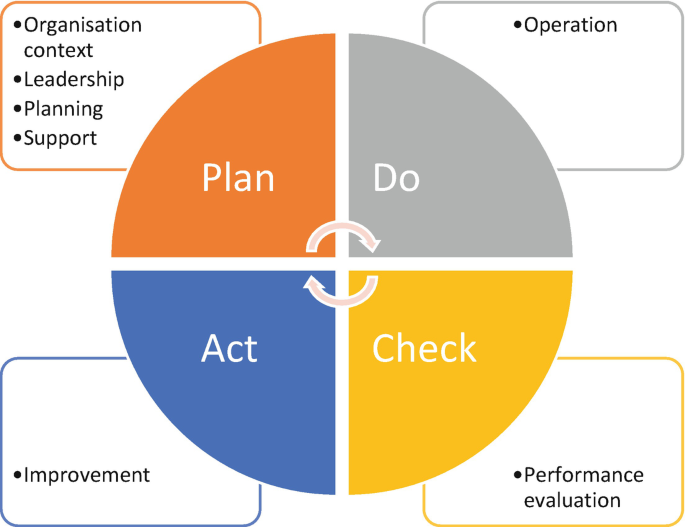
The Harmonized Structure outlines the following core clauses (Clauses 4 through 10) that form the backbone of a fully integrated PDCA (Plan-Do-Check-Act) cycle:
- Context of the Organization – Mapping out internal/external issues and stakeholder expectations across all standards.
- Leadership – Demonstrating top management’s unified commitment and assigning cross-functional responsibilities.
- Planning – Mapping out shared risks, environmental aspects, hazards, and unified organizational objectives.
- Support – Managing resources, competence, awareness, and centralized documented information.
- Operation – Executing integrated operational controls and emergency response plans.
- Performance Evaluation – Monitoring, measuring, and conducting joint internal audits and management reviews.
- Improvement – Driving continuous improvement through consolidated corrective actions.
Certification Audit Timeline & Process
Global Standards guides your organization through a structured IMS certification process with precision and expertise. First, we conduct a comprehensive Gap Analysis, comparing your existing management processes against unified IMS requirements to identify areas for alignment and improvement. Next, we develop a tailored implementation plan with clear deadlines, ensuring all gaps are addressed before formal audits begin.
During implementation, our team provides hands-on support—helping you document integrated processes, train staff across disciplines, and establish key operational controls. Once ready, we schedule the Stage 1 Audit (Documentation Review), where auditors verify that your policies and procedures meet all relevant IMS standards. Upon resolving any initial findings, we proceed to the Stage 2 Audit (On-Site Assessment), evaluating how effectively your integrated system operates in practice, including:
- Process & Operational Effectiveness: Seamless workflow integration across departments.
- Integrated Risk-Based Thinking: Proactive management of quality, environmental, and safety risks.
- Stakeholder & Customer Focus: Meeting the expectations of regulatory bodies, clients, and internal teams.
- Continuous Improvement: Driving ongoing enhancements across all integrated disciplines.
- Throughout the audit journey, we provide real-time guidance to address any non-conformities immediately. Upon successful completion, Global Standards facilitates the final certification issuance through the accreditation body. Following certification, we support you through regular surveillance audits to maintain seamless compliance and drive organizational growth.
By combining rigorous auditing with proactive consulting, we ensure your organization efficiently achieves and sustains its IMS certification—demonstrating your total commitment to operational excellence, risk management, and sustainable performance.
Flexible Certification Options
It is important to note that, while we highly recommend the integrated approach for its maximum synergy and efficiency, we fully understand that not every organization is ready to embark on a full IMS journey at once. Accordingly, Global Standards provides the flexibility to pursue each certification individually—whether you require ISO 9001 for quality management, ISO 14001 for environmental stewardship, or ISO 45001 for occupational health and safety. This modular pathway enables you to strengthen your management systems progressively, at a pace that aligns with your operational capacity, budgetary considerations, and strategic goals, while still benefiting from our expert guidance every step of the way.
Client Validation and Global Recognition
Essentially, the success of these initiatives is validated by our clients themselves. At Global Standards, we pride ourselves on the positive relationships we build, and our clients frequently share their experiences.
Testimonials and Feedback
Specifically, reviews, feedback, and testimonials from Nazeer Dyeing & Bleaching, Sindh Nooriabad Power Company, and Viscolloids Industries reflect their immense satisfaction and positive outcomes. Our clients have shared their success stories on Google and various other platforms, and you can find these testimonials on our website, serving as a testament to our dedication and the tangible value we deliver.
Industry Recognition
Moreover, our work aligns with global best practices observed across industries where IMS certification is recognized as a key driver for business excellence, customer satisfaction, and a sustainable future. The consistent positive feedback we receive reinforces our position as a trusted partner for organizations seeking comprehensive management system solutions.
Phone:
General Landline: +92-21-32534937
Business Development: +92-306-2708496
Operations & Support: +92-308-2255440
Emails:
info@globalstandards.com.pk
business.dev@globalstandards.com.pk
training@globalstandards.com.pk
operation@globalstandards.com.pk
jobs@globalstandards.com.pk
It is important to note that, while we highly recommend the integrated approach for its maximum synergy and efficiency, we fully understand that not every organization is ready to embark on a full IMS journey at once. Accordingly, Global Standards provides the flexibility to pursue each certification individually—whether you require ISO 9001 for quality management, ISO 14001 for environmental stewardship, or ISO 45001 for occupational health and safety. This modular pathway enables you to strengthen your management systems progressively, at a pace that aligns with your operational capacity, budgetary considerations, and strategic goals, while still benefiting from our expert guidance every step of the way.